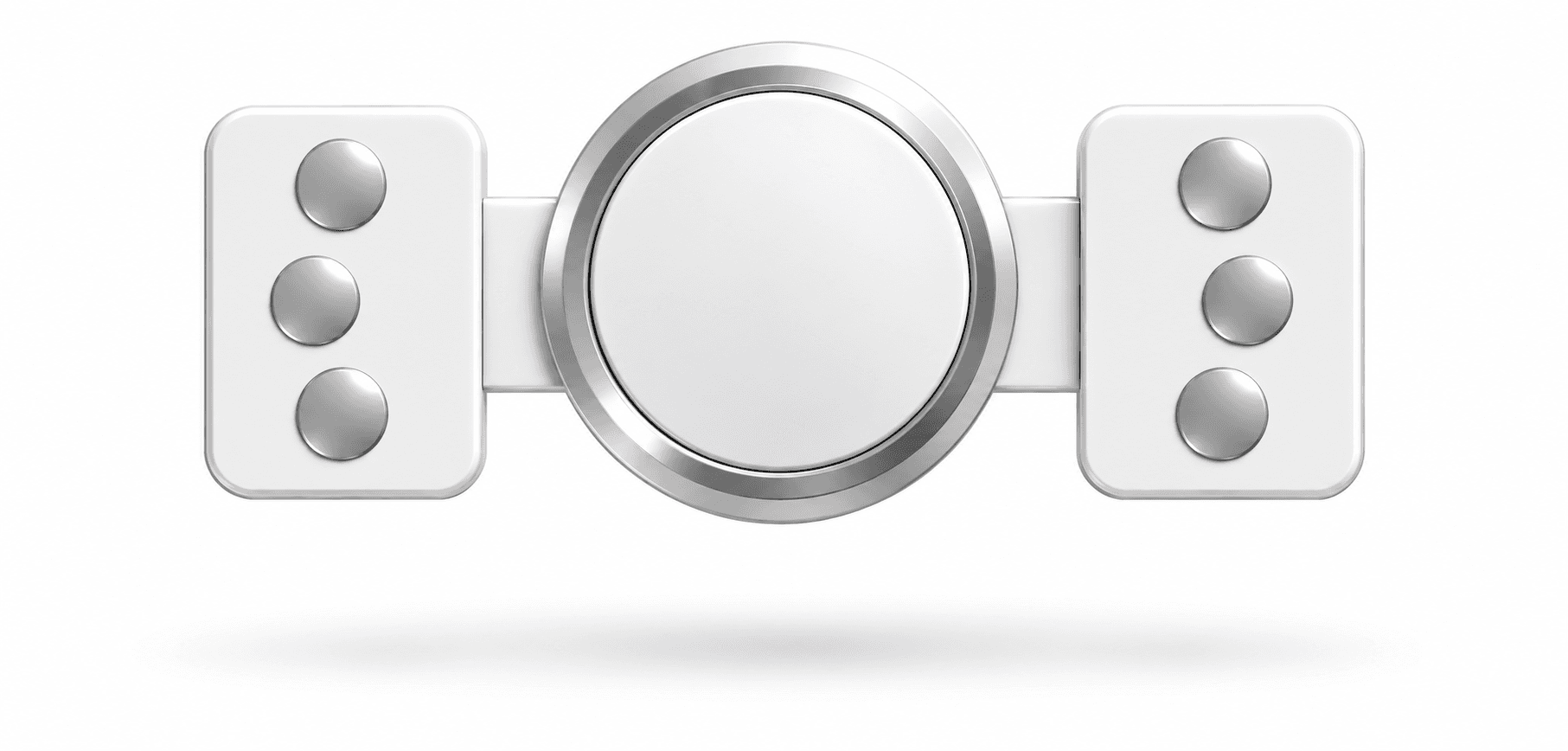
What the Cognipatch Monitors
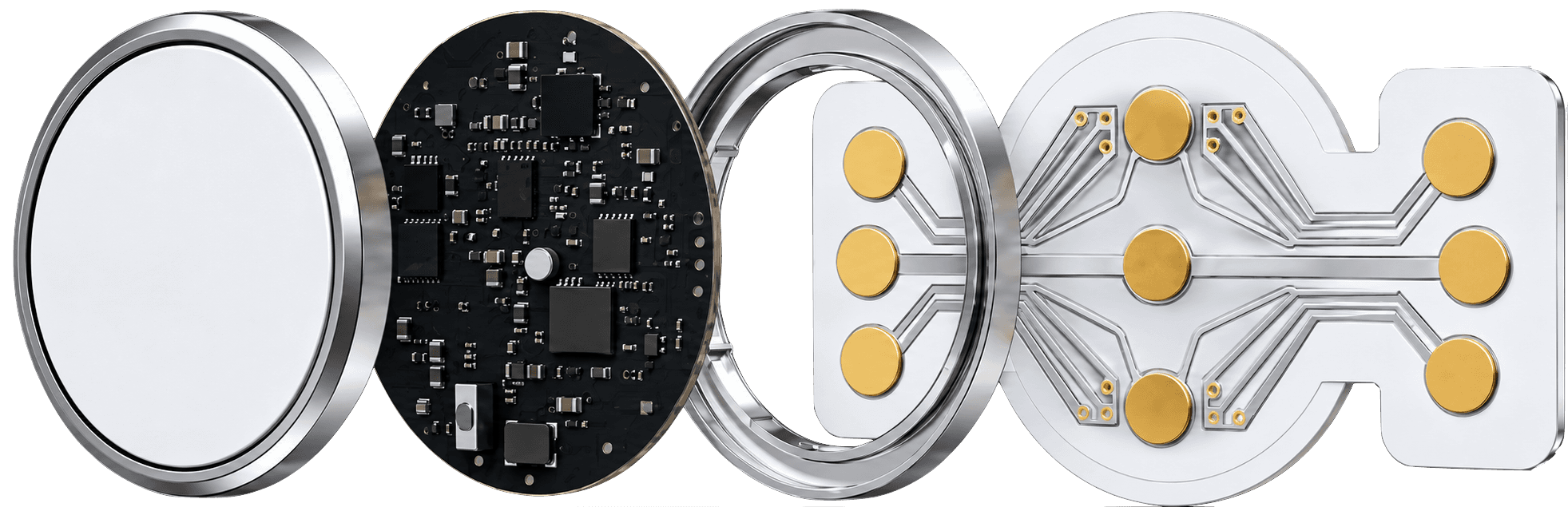
Combined Sensing Modalities
Cognipatch
Cognipatch adheres to the upper back, continuously sampling three physiological channels. The flexible patch operates passively during uncontrolled daily activity.
CALI's App
Raw sensor data streams via Bluetooth LE to the CALI companion app, which handles local preprocessing and on-device feature extraction before transmission.
Patient Insights
A BiLSTM model processes time-series features derived from the three physiological channels, comparing rolling windows against each patient's individual physiological baseline to score deviations.
Clinician Portal
Risk scores, baseline deviation metrics, and longitudinal signal trends are surfaced in a secure web portal with role-based access control and full audit logging.
Clinical Grade, Consumer Ease
Medical-Grade Precision. Consumer-Level Wearability.
CALI combines clinical-grade biosensing with a wearable designed for continuous, everyday use.
A Complete Physiological Picture.
CALI continuously combines three channels (ECG, EMG, and IMU movement and sleep data) with patient-reported symptoms to capture changes across multiple signals, not just a single metric.
Personalized Intelligence, Built In.
Our AI/ML models learn individual physiological patterns over time to identify meaningful changes and give clinicians longitudinal insight between visits.
Built for Clinical Use From Day One.
Regulatory requirements are integrated into our product development from the start, building CALI toward a clinically validated, FDA-cleared monitoring platform.
Pricing
Get Started with CALI
The device
Cognipatch
- Three physiological channels sampled continuously
- Flexible patch worn on the upper back and neck
- Passive monitoring through everyday activity
The app
CALI App

- Live Bluetooth LE streaming from your Cognipatch
- On-device preprocessing and feature extraction
- Personalized insights that learn your patterns over time