About CALI

Objective Data
for Psychiatric Care

CALI is building a continuous physiological monitoring system for psychiatric care, targeting bipolar disorder as the primary application. Current treatment relies on episodic clinical evaluations and subjective self-reporting. NeuroPatch provides continuous sensor data to supplement these assessments with objective, longitudinal physiological records.

Mission

To provide psychiatrists and their patients with continuous, objective physiological data for monitoring mood state. Bipolar disorder affects an estimated 46 million people globally. Most monitoring today relies on self-reported mood diaries and periodic clinical assessments. NeuroPatch is designed to replace these snapshots with continuous physiological measurement.

Vision

Psychiatric care with the same physiological data density as cardiology. NeuroPatch is the first step: a five-sensor wearable that provides clinicians with continuous telemetry rather than quarterly appointment snapshots. The system outputs risk scores, baseline deviation metrics, and temporal trends that are directly interpretable without clinical inference from incomplete self-reports.

How It Works

Four integrated layers: device, mobile, ML engine, and clinician portal.

01

Device

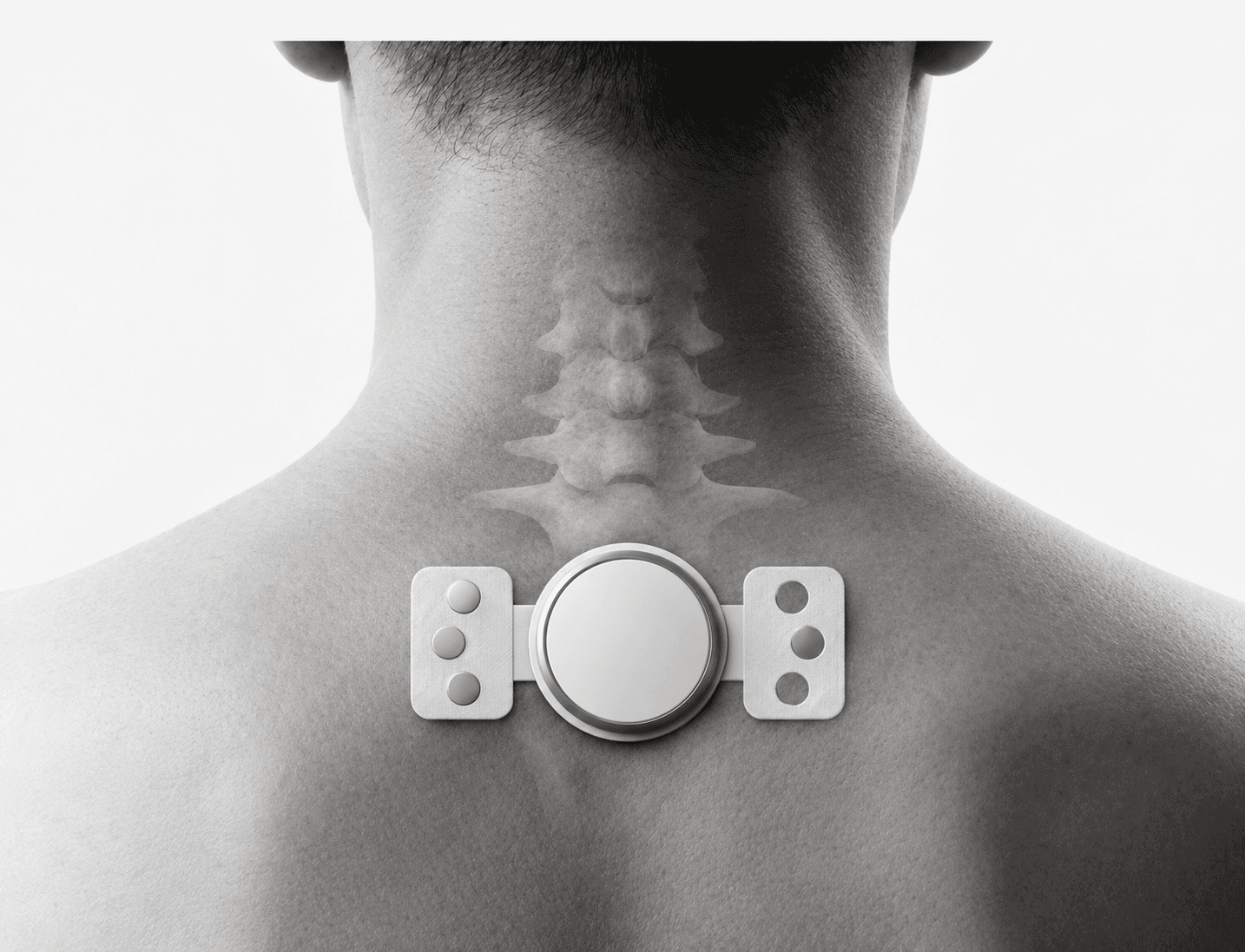
NeuroPatch adheres to the upper back, continuously sampling five physiological channels. The flexible 2" x 11" patch operates passively during uncontrolled daily activity.

02

Mobile App

Raw sensor data streams via Bluetooth LE to the CALI companion app, which handles local preprocessing and on-device feature extraction before transmission.

03

ML Engine

A BiLSTM model processes time-series features derived from the five sensor streams, comparing rolling windows against each patient's individual physiological baseline to score deviations.

04

Clinician Portal

Risk scores, baseline deviation metrics, and longitudinal signal trends are surfaced in a secure web portal with role-based access control and full audit logging.

Sensor Technology

Five channels selected for their validated clinical relevance to autonomic nervous system state and mood disorder monitoring.

EDA

μS

Measures skin conductance driven by eccrine sweat gland activity. Reflects sympathetic nervous system arousal. Elevated values indicate increased autonomic activation associated with stress or mood state changes.

EMG

μV

Measures electrical activity in the upper trapezius muscle. Captures muscle tension and sustained contraction associated with psychosomatic stress and agitation preceding mood episode onset.

Temperature

°C

Monitors peripheral skin temperature to detect thermoregulatory variation. Captures circadian phase shifts and temperature nadir disruptions that correlate with sleep-wake cycle changes in bipolar disorder.

Accelerometer

g

Measures micromotion and body movement to quantify motor activity and postural agitation. Provides continuous actigraphy data correlated with psychomotor changes in bipolar disorder.

Cortisol

ng/mL

Electrochemical channel measuring cortisol concentration in sweat as a biochemical stress marker. Provides a proxy for HPA axis activation, complementing autonomic signals from EDA and EMG.

HIPAA-First Architecture

NeuroPatch is designed with PHI minimization as a first-class requirement. Raw physiological signals are preprocessed on-device. Only derived features are transmitted over encrypted Bluetooth LE to the companion app. The clinician portal enforces role-based access control, maintains a complete audit trail, and encrypts all data at rest and in transit.

Patient identifiers are decoupled from physiological data at the storage layer. A breach of sensor data cannot be correlated with patient identity without a separate access-controlled key.

End-to-End EncryptionOn-Device ProcessingRBAC PortalAudit TrailsPHI Decoupling